How to Choose a Mohs Surgeon: What to Look For

Key Facts About Mohs Surgeon Training
- 1-2 years of dedicated post-residency fellowship training is required for ACMS certification
- 500+ supervised Mohs cases are typically completed during an accredited fellowship
- 99% cure rate for primary BCC is achieved when Mohs is performed by a trained specialist
- 100% of the surgical margin is examined - but only when the surgeon reads their own slides
- 3 skills in 1 - a fellowship-trained Mohs surgeon is trained in cancer removal, pathology interpretation, and reconstruction
Why the Surgeon Matters as Much as the Technique
Mohs micrographic surgery is the most effective treatment for basal cell carcinoma (BCC) and squamous cell carcinoma (SCC), with cure rates reaching 99% for primary BCC. However, the technique alone does not guarantee optimal results. The training, experience, and skill of the surgeon performing the procedure directly influence both the oncologic outcome and the cosmetic result.
Two patients with identical tumors in the same location can have very different experiences depending on the surgeon they choose. One may leave with a barely visible scar and confirmed clear margins. The other may face a suboptimal reconstruction, an unnecessary referral to a separate plastic surgeon, or, in rare cases, inadequate margin control due to poor slide interpretation. The procedure is standardized. The execution is not.
This guide presents the criteria that matter when evaluating a Mohs surgeon, so that you can make an informed decision about your care.
“The surgeon who removes the cancer, reads the pathology slides, and reconstructs the wound has complete continuity of care. No information is lost between steps, and every decision is made by someone who was present from the first incision.”
What ACMS Fellowship Training Means
The American College of Mohs Surgery (ACMS) fellowship is the gold standard credential for Mohs surgeons worldwide. It is a one- to two-year post-residency training program dedicated exclusively to Mohs micrographic surgery, reconstruction, and dermatopathology.
During an ACMS-accredited fellowship, a physician completes approximately 500 or more supervised Mohs cases. This training covers every aspect of the procedure: precise tissue removal using the Mohs layer technique, processing and staining frozen tissue sections, interpreting those sections under the microscope to identify residual cancer cells, and reconstructing the surgical defect using flaps, grafts, and other closure techniques.
The fellowship is distinct from general dermatology residency, which provides broad training in medical and surgical dermatology but does not offer the concentrated, high-volume Mohs experience that a dedicated fellowship provides. Similarly, plastic surgery and general surgery residencies do not include training in Mohs tissue processing or dermatopathology interpretation.
Not all physicians who perform Mohs surgery have completed an accredited fellowship. Some learn the technique through short courses, observerships, or informal training. While these physicians may be competent surgeons in other respects, the depth and rigor of their Mohs-specific training differs significantly from that of a fellowship-trained specialist.
Board Certification vs. Fellowship: What Patients Should Understand
Board certification and fellowship training are related but separate credentials, and patients benefit from understanding the distinction.
Board certification in dermatology (from the American Board of Dermatology or its Israeli equivalent) confirms that a physician has completed an accredited dermatology residency and passed a standardized examination. It establishes baseline competence in dermatology as a whole. Many board-certified dermatologists perform skin surgery, including biopsies and standard excisions.
Fellowship training in Mohs surgery is an additional layer of specialization beyond board certification. It indicates that the physician chose to pursue one to two more years of intensive, focused training in a single surgical technique. This distinction matters because Mohs surgery involves skills that are not part of standard dermatology training, particularly the ability to read frozen tissue sections and perform complex facial reconstruction.
A board-certified dermatologist who has not completed a Mohs fellowship may offer Mohs surgery, but their training pathway is different. When evaluating a surgeon, asking specifically about fellowship training provides a clearer picture of their qualifications than asking about board certification alone.
Questions to Ask Your Mohs Surgeon
Before committing to any surgeon for Mohs surgery, several questions can help you assess their qualifications and approach. These are not confrontational questions. They are standard inquiries that any well-trained surgeon will answer readily.
Are you fellowship-trained in Mohs surgery? This is the single most important question. An ACMS fellowship or equivalent accredited fellowship indicates rigorous, dedicated training. Ask where they trained and for how long.
How many Mohs procedures have you performed? Volume matters in surgery. Surgeons who perform Mohs regularly maintain their skills and stay current with evolving techniques. A surgeon who performs several hundred cases per year has a different experience base than one who performs the procedure occasionally.
Do you read your own pathology slides? This question is critical. In true Mohs surgery, the surgeon personally examines each frozen tissue section under the microscope to determine whether cancer remains. Some practitioners outsource this step to an external pathologist, which introduces delays and removes the surgeon from a key decision-making step. When the same person who removes the tissue also reads the slides, there is no communication gap and no risk of misorientation.
Do you perform your own reconstruction? After the tumor is fully removed, the wound needs to be closed. Fellowship-trained Mohs surgeons are trained in a full range of reconstructive techniques, including local flaps, skin grafts, and complex closures on the face. Some surgeons remove the cancer but refer patients to a plastic surgeon for reconstruction. While this approach can work, it adds an additional procedure, additional cost, and a gap in continuity of care. The surgeon who removes the cancer understands the wound geometry better than anyone and is often best positioned to reconstruct it. For more on this topic, see our guide on questions to ask before Mohs surgery.
Where do you operate? Mohs surgery is typically performed in an office-based surgical suite or an outpatient hospital setting under local anesthesia. Both settings can be appropriate, but the facility should have a dedicated on-site laboratory for processing frozen sections. Ask about the laboratory setup and whether tissue processing happens on-site or is sent elsewhere.
The Role of Reconstruction Skill
Mohs surgery creates a wound that must be repaired, and the quality of that repair determines the cosmetic outcome the patient lives with permanently. On the face, particularly around the nose, eyes, ears, and lips, reconstruction requires detailed knowledge of facial anatomy, tissue tension lines, and aesthetic subunits.
Fellowship-trained Mohs surgeons spend a significant portion of their training learning techniques ranging from simple layered closures to complex interpolation flaps and full-thickness skin grafts.
The advantage of having one surgeon handle both the cancer removal and the reconstruction is continuity. The same physician who mapped the tumor, identified its margins, and created the wound is the one who designs and executes the repair. They understand the depth, angle, and tissue characteristics of the defect because they created it. No handoff is needed, and no information is lost.
When reconstruction is delegated to a separate surgeon, that second physician is working with a wound they did not create, in a tissue bed they did not examine microscopically. While skilled plastic surgeons can achieve excellent results, the loss of continuity is a real factor, particularly for complex cases. For an overview of reconstruction outcomes on specific facial areas, see our article on Mohs surgery on the face, eyelid, ear, and lip.
Navigating Referrals in Israel: Kupat Cholim and Private Options
In Israel, the path to Mohs surgery typically begins with a referral from a dermatologist within your kupat cholim (health fund). The referral process varies slightly between Clalit, Maccabi, Meuhedet, and Leumit, but the general steps are consistent.
First, a dermatologist examines and biopsies the suspicious lesion. Once the biopsy confirms skin cancer, the dermatologist determines whether Mohs surgery is indicated based on the tumor type, location, size, and histologic subtype. If Mohs is recommended, the dermatologist writes a referral specifying the medical justification.
The referral is submitted to the health fund for authorization. Depending on your supplementary insurance plan (shaban), coverage may be partial or full. Maccabi members can access Mohs surgery at Assuta Medical Center, while Clalit members can receive treatment at Herzliya Medical Center. For detailed information about costs and coverage, see our guide on Mohs surgery cost and insurance in Israel.
Patients also have the option of seeking Mohs surgery privately, outside the kupat cholim system. Private treatment typically offers shorter wait times and the ability to choose a specific surgeon. Whether you pursue the public or private route, the criteria for evaluating your surgeon remain the same.
One practical consideration: not all surgeons in Israel who offer Mohs surgery have completed an ACMS-accredited fellowship. When your kupat cholim approves a referral, ask specifically about the surgeon's training background. You are entitled to know who will be performing your procedure and what their qualifications are.
When to Consider a Second Opinion
Seeking a second opinion is a normal and accepted part of medical care. Here are situations where it may be helpful.
If you are unsure about your surgeon's training background, it is reasonable to ask directly about fellowship training and to verify credentials through the ACMS directory. Surgeons with specialized training are typically happy to discuss it.
If you have questions about how pathology slides are handled during the procedure, ask whether the surgeon reads them personally or works with a separate pathologist. Both models exist, and understanding the workflow helps you know what to expect.
If the recommended treatment plan feels unclear, or if you are uncertain whether Mohs surgery is the right approach for your specific tumor, a second opinion from another dermatologic surgeon can provide clarity and confidence in the plan.
Ultimately, you should feel comfortable with the surgeon, understand the procedure, and have your questions answered thoroughly. If any of these elements are missing, consulting another physician is always an option.
Frequently Asked Questions
What is the difference between a dermatologist and a Mohs surgeon?
A dermatologist is a physician who has completed a residency in dermatology, covering medical, surgical, and cosmetic aspects of skin disease. A Mohs surgeon is a dermatologist (or in some cases, another surgical specialist) who has completed additional fellowship training specifically in Mohs micrographic surgery. All Mohs surgeons have surgical training, but not all dermatologists are trained in Mohs surgery.
Can a plastic surgeon perform Mohs surgery?
Plastic surgeons are skilled in surgical reconstruction but are not typically trained in Mohs tissue processing or dermatopathology slide interpretation. Some plastic surgeons perform excisions with frozen section analysis, which is a related but different technique. If you are considering a surgeon whose primary training is in plastic surgery, it is worth asking about their specific Mohs training background and whether they process and read their own slides during the procedure.
How do I verify that a surgeon is ACMS fellowship-trained?
The American College of Mohs Surgery maintains a public directory of fellowship-trained members on its website at mohscollege.org. You can search by name or location. Membership in the ACMS confirms that the surgeon completed an accredited fellowship program.
Does more experience always mean better outcomes?
Higher surgical volume is generally associated with better outcomes in procedural medicine. A surgeon who performs Mohs surgery several times per week maintains sharp pattern recognition for both pathology interpretation and reconstruction. However, experience should be considered alongside training. Volume without formal fellowship training is not equivalent to fellowship-trained practice.
Is Mohs surgery in Israel performed to the same standard as in the United States?
Mohs surgery performed by an ACMS fellowship-trained surgeon in Israel follows the same technique and standards as the procedure performed in the United States. The ACMS fellowship is an international credential, and surgeons who complete it are trained to the same level regardless of where they subsequently practice. The key factor is the individual surgeon's training, not the country.
Should I choose a surgeon based on location or qualifications?
Qualifications should take priority over convenience. Mohs surgery is a same-day outpatient procedure, and traveling to see a fellowship-trained specialist is worthwhile for a procedure that determines both your cancer cure rate and your cosmetic outcome. The results are permanent, so the choice of surgeon matters more than the distance to the clinic.
Sources & References
- Tolkachjov SN et al. (2017). Understanding Mohs Micrographic Surgery: A Review and Practical Guide for the Nondermatologist. Mayo Clin Proc, 92(8):1261-1271. [Link]
- Mosterd K et al. (2008). Surgical excision versus Mohs micrographic surgery for primary and recurrent basal-cell carcinoma of the face: a prospective randomised controlled trial with 5-years' follow-up. Lancet Oncol, 9(12):1149-1156. [Link]
- American College of Mohs Surgery - About ACMS Fellowship Training [Link]
- Essentials of Mohs Micrographic Surgery - StatPearls [Link]
- Skin Cancer Foundation - Mohs Surgery [Link]
Medical Disclaimer
This article is for informational purposes only and does not constitute medical advice. Always consult a qualified dermatologist for diagnosis and treatment. The information provided should not be used for self-diagnosis or as a substitute for professional medical care.
About the Author
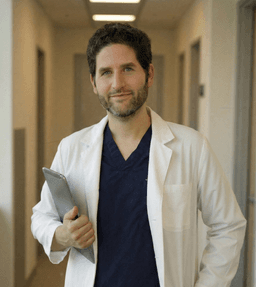
M.D., Dermatologic Surgery & Mohs Specialist, ACMS Fellow
Dr. Yehonatan Kaplan is a dermatology specialist with a US-trained fellowship in Mohs micrographic surgery and dermatologic oncology. He is a Fellow of the American College of Mohs Surgery (ACMS) and a member of the ASDS, with experience in over 3,000 Mohs procedures.
Medically reviewed on April 22, 2026
Related Articles
Why Mohs Surgery Has a 99% Cure Rate: The Science Explained
Mohs surgery achieves a 99% cure rate for basal cell carcinoma, significantly higher than any other treatment method. This article explains the scientific principles behind this exceptional success rate, including real-time margin analysis and complete tissue examination.
Read More →Mohs Surgery10 Questions to Ask Your Dermatologist Before Mohs Surgery
Walking into Mohs surgery informed and prepared makes a real difference in your experience and outcome. Here are the ten most important questions to ask your dermatologist before your procedure, along with the answers you should expect.
Read More →Mohs SurgeryCan I Return to Work After Mohs Surgery? Activity Guidelines
One of the most common questions patients ask is how soon they can return to work and normal activities after Mohs surgery. This guide provides clear, practical timelines for desk work, physical jobs, exercise, and daily activities during recovery.
Read More →