AI in Mohs Surgery: How Technology Is Improving Surgical Outcomes for Patients

Key Facts: AI in Mohs Surgery
- AUC > 0.93 reported for AI detection of BCC on Mohs frozen sections
- 30-45 min typical wait time per Mohs stage for manual slide reading
- 100% of the tissue margin is examined in Mohs, compared to less than 1% in standard excision
- 1-3 stages needed in most Mohs procedures - AI may help reduce the number further
Where Surgery Meets Technology
Mohs micrographic surgery has been the gold standard for treating basal cell carcinoma and squamous cell carcinoma for decades, consistently achieving cure rates above 99 percent for primary tumors. The procedure works because of a simple but powerful principle: every millimeter of the tissue margin is examined under a microscope before the surgeon decides whether more tissue needs to be removed.
That process is remarkably effective, but it is also time-intensive. Each surgical stage requires the tissue to be frozen, sectioned, stained, and read by the Mohs surgeon under a microscope. Patients typically wait 30 to 45 minutes between stages. For tumors that require multiple stages, the procedure can stretch across several hours.
Now, a growing body of research suggests that artificial intelligence may be able to support the Mohs surgeon during this critical laboratory step, potentially making the process faster, more consistent, and even more accurate.
“I see AI as a second pair of eyes in the lab. It does not replace the Mohs surgeon's judgment, but it can flag areas of concern on a frozen section that deserve closer attention. The goal is always the same: complete cancer removal with the least possible impact on the patient.”
Understanding the Bottleneck: Frozen Section Analysis
To appreciate what AI brings to Mohs surgery, it helps to understand where the time goes during the procedure.
After each layer of tissue is removed, a laboratory technician prepares frozen sections. The tissue is frozen, cut into ultra-thin slices, placed on glass slides, and stained. The Mohs surgeon then examines these slides under a microscope, looking for residual tumor cells along the margin.
This step demands intense concentration. A single Mohs slide can contain thousands of cells, and the surgeon must distinguish cancer cells from normal skin structures, inflammatory cells, scar tissue, and artifacts introduced during the freezing process. The difference between a positive margin and a clear one can come down to a small cluster of cells in one corner of a slide.
The accuracy of this process is remarkably high in experienced hands. But it is also inherently human. Fatigue at the end of a long surgical day, subtle histological patterns in aggressive tumor subtypes, and the sheer volume of tissue to review all represent areas where a computational second opinion could add value.
What the Research Shows
A systematic review and meta-analysis published in Dermatologic Surgery in 2024 examined the performance of AI models applied to Mohs surgical sections. The findings were encouraging. Deep learning models trained on whole-slide images of frozen sections achieved an area under the curve exceeding 0.93 for detecting basal cell carcinoma, a level of performance that approaches that of experienced dermatopathologists.
Separate studies have demonstrated that convolutional neural networks can identify BCC on frozen sections with sensitivity above 90 percent while maintaining specificity above 85 percent. One research group developed a weakly supervised classification model specifically for Mohs sections that could distinguish between tumor-positive and tumor-negative slides without requiring pixel-level annotations during training, a significant practical advantage for deploying such systems in real clinical settings.
Another study from 2024 presented a deep learning model validated on a multi-institutional dataset of Mohs frozen sections for nonmelanoma skin cancer. The model demonstrated consistent performance across different tissue preparation methods and staining protocols, an important finding because frozen section quality can vary between laboratories.
How AI Could Work in Practice
It is important to be clear about what AI does and does not do in this context. No AI system is currently replacing the Mohs surgeon's role in reading frozen sections. The technology is being developed as a decision support tool, a second reader that can highlight areas of concern on a slide before or while the surgeon reviews it.
In a typical implementation, the workflow would look something like this. The tissue is prepared and scanned using a whole-slide imaging system, essentially a high-resolution digital camera attached to a microscope. The AI algorithm analyzes the scanned image and generates a heat map, overlaying areas where the model detects features consistent with tumor cells. The Mohs surgeon then reviews both the heat map and the original slide, using the AI output as one additional data point in the decision-making process.
This approach preserves the surgeon's authority and clinical judgment while potentially reducing the time needed to scan each slide and decreasing the risk of missing a small focus of residual tumor.
What This Means for Patients
From the patient's perspective, the integration of AI into Mohs surgery could translate into several tangible benefits.
Shorter procedure times. If AI can help the surgeon identify clear margins more efficiently, the time between stages may decrease. For a patient who is waiting with a wound on their face, even a modest reduction in wait time is meaningful.
Greater consistency. AI does not get tired at the end of the day. It provides the same level of analysis on the twentieth slide as it does on the first. This consistency is particularly valuable during complex cases that require many stages.
Higher confidence in clear margins. An AI second reader adds a layer of verification. If both the surgeon and the algorithm agree that the margin is clear, there is added confidence that the cancer has been completely removed.
Potential for fewer unnecessary stages. Better pre-operative tumor mapping, combined with AI-assisted margin analysis, could help surgeons make more precise initial excisions, potentially reducing the total number of stages needed.
None of these benefits require the patient to do anything differently. The experience of Mohs surgery, the local anesthesia, the staged removal, the same-day reconstruction, remains the same. The difference happens behind the scenes, in the laboratory.
The Current State of AI at Our Practice
At our practice, we already integrate artificial intelligence into the diagnostic phase of care through the FotoFinder AIMEE system for dermoscopic analysis. This AI-powered platform helps us identify suspicious lesions earlier and with greater confidence, which directly affects surgical planning.
When it comes to frozen section analysis during Mohs surgery itself, AI-assisted reading tools are still in the research and validation phase. We follow this field closely and evaluate emerging tools with the same rigor we apply to any new technology: does it improve patient outcomes without introducing new risks?
The principles guiding our approach are straightforward. Technology should serve the patient, not the other way around. Any AI tool we adopt must demonstrate clear clinical benefit in published, peer-reviewed studies. And the Mohs surgeon's expertise and judgment must always remain at the center of every decision.
Broader Applications of AI in Dermatologic Surgery
Beyond frozen section analysis, AI is being explored in several areas relevant to surgical dermatology.
Pre-operative tumor border mapping. AI-assisted analysis of dermoscopic and reflectance confocal microscopy images may help define tumor margins before the first incision, potentially reducing the number of Mohs stages needed.
Reconstruction planning. Machine learning models are being trained on large databases of surgical outcomes to help predict which closure techniques produce the best functional and cosmetic results for different wound sizes and anatomic locations.
Post-operative monitoring. AI-powered image comparison tools could help detect early signs of recurrence during follow-up visits, flagging subtle changes that might be difficult to appreciate with the naked eye.
These applications are at various stages of development. Some are closer to clinical use than others. What they share is a common philosophy: using computational tools to enhance, not replace, the surgeon's skills and experience.
Looking Ahead
The integration of AI into Mohs surgery is not a question of if, but when and how. The published evidence is growing, the technology is maturing, and the potential benefits for patients are real.
What will not change is the fundamental nature of the procedure. Mohs surgery will continue to rely on the Mohs surgeon's ability to interpret complex histology, make real-time surgical decisions, and perform precise reconstruction. AI will be a tool in that process, much as the microscope itself was a transformative tool when Dr. Frederic Mohs first developed the technique.
For patients considering Mohs surgery today, the message is reassuring. You are already receiving the most effective skin cancer treatment available, performed by fellowship-trained specialists using proven techniques. The AI tools on the horizon will only make that process better.
Frequently Asked Questions
Is AI currently being used during my Mohs surgery?
AI-assisted frozen section reading is still in the research phase and is not yet part of standard clinical practice. However, AI is already used in the diagnostic phase at our practice, through the FotoFinder AIMEE system for dermoscopic analysis, which helps identify suspicious lesions before surgery is planned.
Will AI replace the Mohs surgeon?
No. AI in this context functions as a decision support tool, a second reader that highlights areas of interest. The Mohs surgeon's expertise, clinical judgment, and surgical skill remain essential and irreplaceable. The goal of AI is to assist the surgeon, not to operate independently.
How accurate is AI at detecting skin cancer on frozen sections?
Published studies report an area under the curve exceeding 0.93 for AI detection of BCC on Mohs frozen sections. This is a strong level of performance, though it is important to note that these results come from controlled research settings. Clinical validation in diverse, real-world environments is ongoing.
Will AI make Mohs surgery faster?
Potentially, yes. If AI can help the surgeon scan slides more efficiently and identify clear margins with greater confidence, the time between stages could decrease. However, the priority is always accuracy and completeness of cancer removal, not speed.
Does AI work for all types of skin cancer in Mohs surgery?
Most research to date has focused on basal cell carcinoma, the most common indication for Mohs surgery. Studies on squamous cell carcinoma and other tumor types are ongoing. AI performance can vary between tumor subtypes, and more research is needed before these tools are broadly applied across all indications.
Sources & References
- Mirza FN et al. (2024). Artificial Intelligence for Mohs and Dermatologic Surgery: A Systematic Review and Meta-Analysis. Dermatologic Surgery, 50(9):828-835. [Link]
- Geijs DJ et al. (2025). Weakly Supervised Classification of Mohs Surgical Sections Using Artificial Intelligence. Modern Pathology, 38(2):100411. [Link]
- Chacko N et al. (2023). Intraoperative margin assessment for basal cell carcinoma with deep learning and histologic tumor mapping. npj Precision Oncology, 7:121. [Link]
- Varra V et al. (2024). Development and validation of a deep learning model for improving detection of nonmelanoma skin cancers treated with Mohs micrographic surgery. JAAD International. [Link]
- Esteva A et al. (2017). Dermatologist-level classification of skin cancer with deep neural networks. Nature, 542(7639):115-118. [Link]
- Nahm WJ et al. (2025). Artificial Intelligence in Dermatology: A Review of Approved Applications and Future Directions. International Journal of Dermatology. [Link]
Medical Disclaimer
This article is for informational purposes only and does not constitute medical advice. Always consult a qualified dermatologist for diagnosis and treatment. The information provided should not be used for self-diagnosis or as a substitute for professional medical care.
About the Author
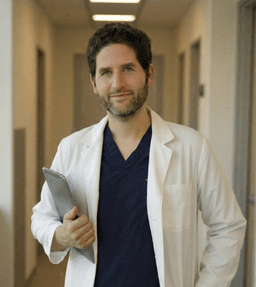
M.D., Dermatologic Surgery & Mohs Specialist, ACMS Fellow
Dr. Yehonatan Kaplan is a dermatology specialist with a US-trained fellowship in Mohs micrographic surgery and dermatologic oncology. He is a Fellow of the American College of Mohs Surgery (ACMS) and a member of the ASDS, with experience in over 3,000 Mohs procedures.
Medically reviewed on March 19, 2026
Related Articles
Why Mohs Surgery Has a 99% Cure Rate: The Science Explained
Mohs surgery achieves a 99% cure rate for basal cell carcinoma, significantly higher than any other treatment method. This article explains the scientific principles behind this exceptional success rate, including real-time margin analysis and complete tissue examination.
Read More →Mohs Surgery10 Questions to Ask Your Dermatologist Before Mohs Surgery
Walking into Mohs surgery informed and prepared makes a real difference in your experience and outcome. Here are the ten most important questions to ask your dermatologist before your procedure, along with the answers you should expect.
Read More →Mohs SurgeryCan I Return to Work After Mohs Surgery? Activity Guidelines
One of the most common questions patients ask is how soon they can return to work and normal activities after Mohs surgery. This guide provides clear, practical timelines for desk work, physical jobs, exercise, and daily activities during recovery.
Read More →